


Data center liquid coolants
ZITREC® EC - more than PG25
ZITREC® EC direct-to-chip coolants are designed for modern data centers operating under increasing thermal loads. They deliver reliable heat transfer and long-term system protection in high-density server environments.
Why liquid cooling is becoming essential in modern data centers
The growth of AI and high-performance computing (HPC) is increasing the thermal demands on modern data centers. As CPUs and GPUs continue to become more powerful, chip power and heat output increase accordingly, making thermal management a growing challenge.
Traditional air-cooling infrastructure was not designed for this level of heat density. To address this, direct-to-chip cooling removes heat directly from CPUs and GPUs, making it a more efficient way to manage rising thermal loads in high-density server environments. This approach enables faster heat removal, improved system reliability and lower power usage effectiveness (PUE). The ZITREC® EC range was developed specifically for these next-generation cooling demands.
OCP-Inspired Liquid Cooling
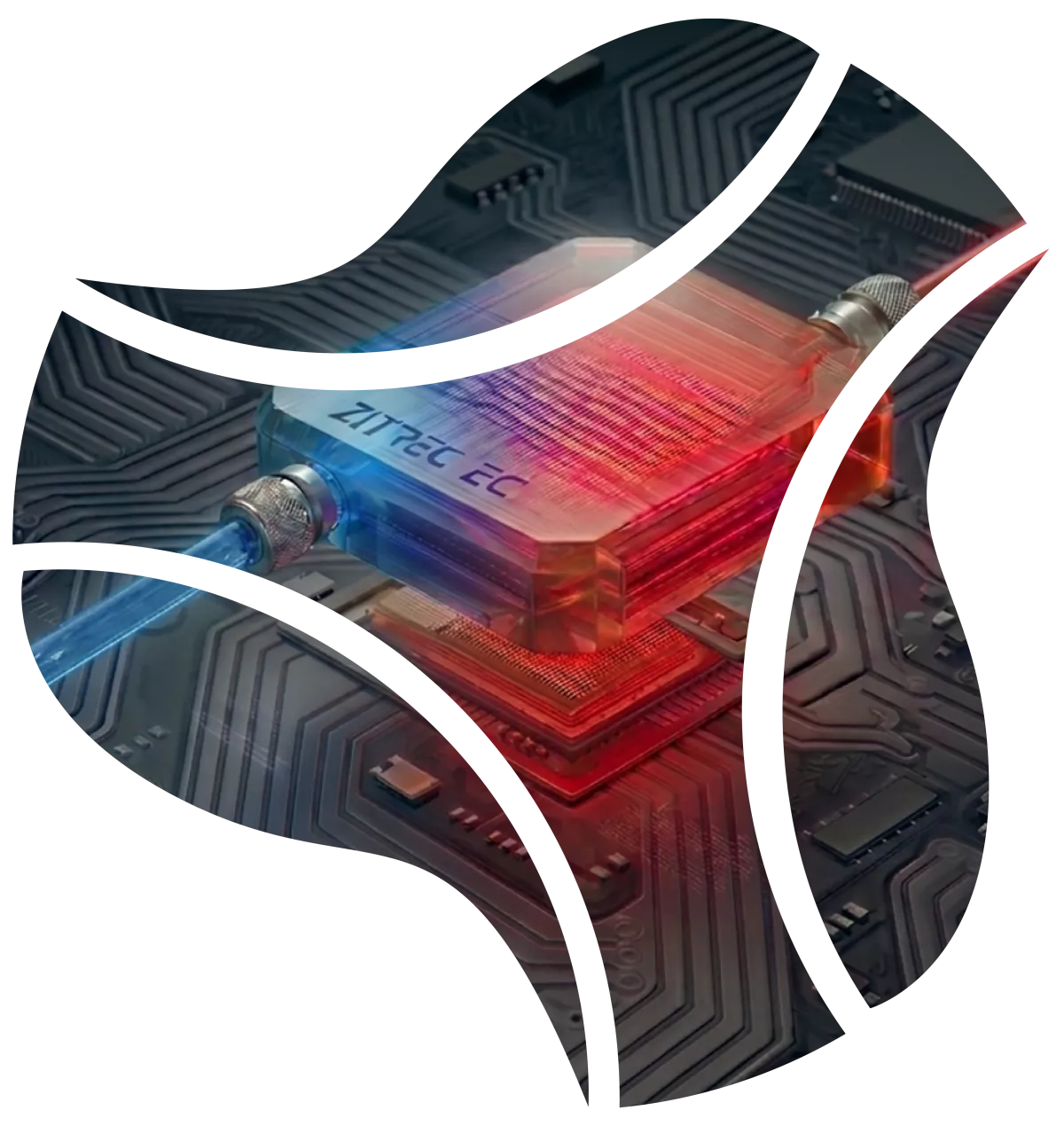
ZITREC® EC 20 is a PG25 direct-to-chip liquid cooling solution developed for modern data center applications. It is designed in line with OCP-inspired™ requirements and supports efficient and reliable thermal management in high-performance environments.
It follows the PG25 reference used across the industry and is listed on the OCP Marketplace, further confirming its alignment with current data center cooling standards.

Key benefits of the ZITREC® EC liquid coolant range
ZITREC® EC was developed specifically for Direct-to-Chip (DTC) applications with high thermal loads. The range is available in propylene glycol (PG), ethylene glycol (EG) and fully water-based formulations. It combines efficient heat transfer, patented Organic Additive Technology (OAT), system compatibility and reliable performance under demanding conditions. Also available in low-carbon ECO version.
Optimal thermal performance
Long-life Corrosion Protection
Proven Material Compatibility
No biofouling
Globally Non-classified PG25 Solutions
Trusted by Industry Leaders
Choosing the right coolant formulation
The ZITREC® EC range offers multiple coolant formulations for different direct-to-chip cooling requirements. Built on patented Organic Additive Technology (OAT), it delivers corrosion protection, material compatibility and reliable thermal performance for modern data center cooling systems.
ZITREC EC ECO
Reduced carbon footprint, same trusted performance
The ZITREC® EC range is also available in an ECO version with a reduced Product Carbon Footprint (PCF). The ECO version uses base fluids derived from bio-based or recycled raw materials, allocated through a certified mass balance approach.
This approach allows renewable or recycled feedstocks to be used in production with full traceability through ISCC PLUS certification.
ZITREC® EC ECO delivers the same trusted cooling performance, system compatibility and operational reliability as the standard formulation, with the added benefit of a reduced PCF.

More than PG25
Arteco’s approach to modern data center liquid cooling goes beyond PG25
More than one product
A full portfolio of engineered coolants, including PG-, EG- and water-based formulations for different system requirements.
More than a coolant
Lifecycle support for coolant performance, from start-up assistance and fluid validation to sample analysis, monitoring and system health checks.
More than a supplier
Close collaboration with engineers, system designers and OCP partners to develop and test cooling fluids for demanding data center applications.
More than sustainable
ECO formulations, lower-impact packaging and a continued focus on reducing the environmental impact of liquid cooling.
More than today
Active R&D to address future chip power, new materials and evolving thermal management requirements.
FAQ: direct-to-chip liquid cooling
Stay updated on liquid cooling for data centers
We publish regular blog posts and updates on data center cooling through the Arteco Knowledge Hub and LinkedIn. With more than 25 years of experience in cooling technology, we provide expert insights, practical guidance and the latest innovations in liquid cooling.
Explore the Arteco Knowledge Hub and follow ZITREC EC on LinkedIn to stay informed about new developments.
Data center trends defining the AI era
The AI boom is transforming data centers at unprecedented speed. Arteco's report explores the trends and innovations defining this critical moment of exponential growth, bold transformations, and global ambition and captures why data centers stand at the heart of the AI era.
Preparing data centers for a cooler, more flexible future
As data centers face rising compute demands, traditional air cooling is hitting its limits. Liquid cooling offers a powerful alternative enabling higher densities, better energy efficiency, and lower environmental impact. But making the switch requires more than new hardware: it demands infrastructure upgrades, skilled teams, and close collaboration with vendors.
The data center of 2030: smarter, faster and more sustainable
Keeping your data center cool isn’t just about temperature, it’s about compatibility. ZITREC EC is engineered to work seamlessly with a wide range of materials used in liquid cooling systems, helping prevent corrosion, leaks, and system failures. Discover how this advanced coolant supports long-term performance, reduces maintenance, and enables high-density AI deployments with confidence.
Talk to our cooling experts
Every data center has different cooling challenges. Our experts help you find the right liquid cooling approach based on your system requirements, performance needs and sustainability goals.
Get in touch to discuss your cooling needs and identify the right ZITREC® EC solution for your data center infrastructure.