Four things you need to know about AI Infrastructure
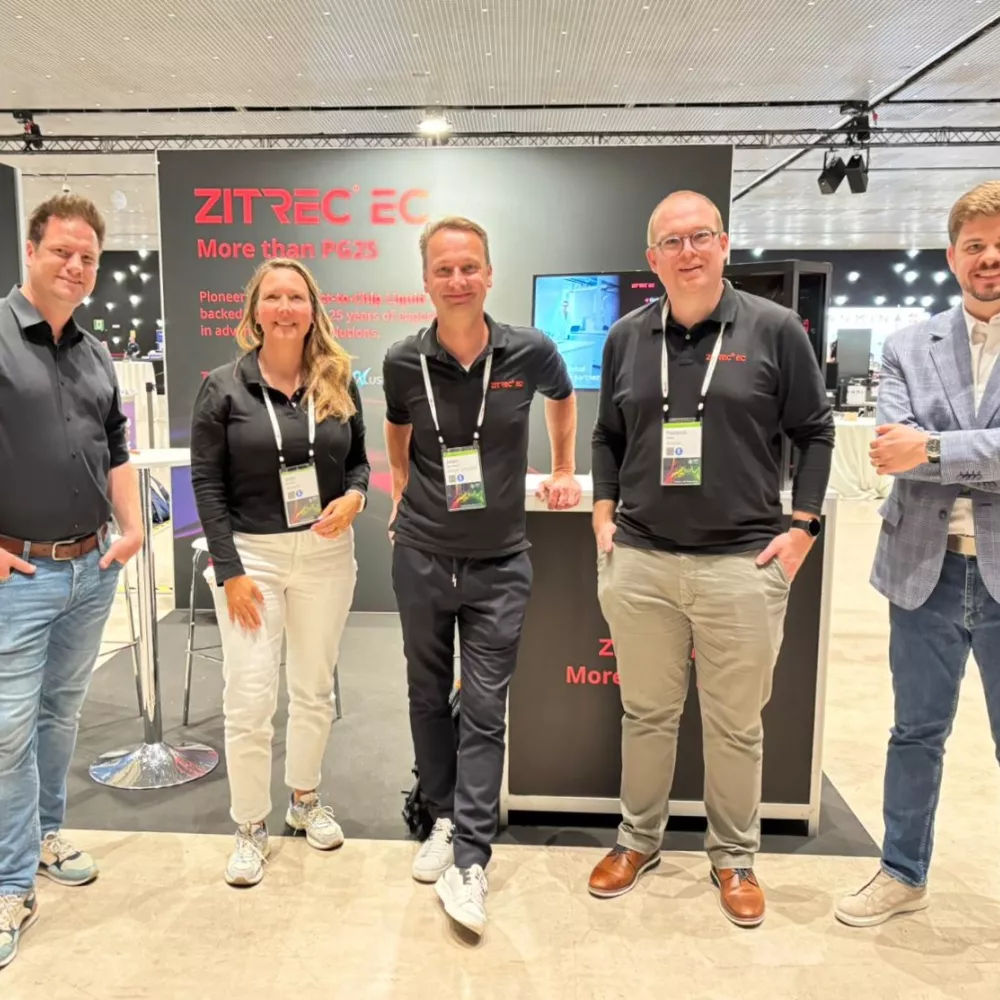
Our team had an inspiring time at the 2026 OCP Summit in Barcelona, where technical and business leaders from EMEA came together to tackle crucial issues related to data center sustainability, energy efficiency, and heat reuse. The focus in this edition was on exploring how innovations from hyperscale data center operators can contribute to solving these challenges.
With knowledge sharing deeply embedded in Arteco’s culture, we wanted to capture and share some of the key insights our team gathered through industry conversations and exchanges with peers. Several themes emerged consistently, offering a clear view of where the market is heading.
Key takeaways of OCP EMEA Summit 2026
-
As the industry grows more powerful and complex, collaboration is becoming increasingly essential.
-
The unprecedented pace of AI ecosystem evolution is reshaping system design and infrastructure choices.
-
Cooling is no longer an afterthought in AI infrastructure scalability. It has become a strategic enabler.
-
The sheer scale of AI infrastructure is bringing power and grid constraints into focus years in advance, driving proactive planning at an unprecedented level.
All Together Now
As technology grows increasingly complex, and AI in particular accelerates this shift, the era of the lone-wolf infrastructure company is rapidly coming to an end. The AI industry is no longer a landscape of isolated players, but an intricately connected ecosystem of interdependent partners, each contributing critical expertise to a much larger whole. One of the most powerful outcomes of this evolution is the rise of open collaboration and faster innovation. Hyperscalers, manufacturers, technology partners, and customers are increasingly joining forces to tackle shared challenges collectively, moving with a level of speed and efficiency that no single organization could achieve alone.
NVIDIA, for instance, collaborates closely with IT server and CDU (cooling distribution unit) OEMs to deliver fully integrated AI infrastructure solutions to customers These turnkey solutions go beyond compute alone, combining IT hardware, power, and cooling into one cohesive system. In areas like liquid cooling, industry players across the supply chain collaborate with chip companies and server OEMs to develop compatible cooling technologies, ensuring the entire ecosystem is designed to work seamlessly together.

Source: "The Fungible Data Center: A Blueprint for the AI Era" by Amber Huffman, Google (slide 22)
Google’s presentation at the OCP event was a compelling demonstration of what collaboration can achieve at scale, highlighting a broad portfolio of joint innovation initiatives. Among them was Mt Diablo, a project developed in partnership with (partial) competitors Meta and Microsoft to build a sidecar capable of handling 400V DC power distribution. Another standout initiative was Project Deschutes, a collaborative effort with six CDU manufacturers to create a standardized cooling distribution unit designed for the demands of high-density, liquid-cooled racks. As a final example, Google also highlighted its Open Data Center initiative: an effort to develop an open blueprint for AI data centers, bringing the industry together around shared designs and standards for the next generation of AI infrastructure.

Source: "European 1MW rack - HDINI" by Jon Summers, Research Institutes of Sweden & Luis Castrillo, Castrol (BP) (slide 6)
Beyond Google’s own ecosystem, we also learned at the OCP event that collaboration is driving innovation in Europe through the H-DINI project. The latter brings together multiple industry players to develop a 1 MW rack, with a final demonstration targeted for 2028. To put it in perspective, today’s most powerful AI rack consumes about 120kW (GB300 NVL72). They are targeting almost 10× that. Given the extreme density involved, the project is expected to combine multiple cooling approaches, likely including single-phase immersion and direct-to-chip liquid cooling.
Speed is the strategy
Meta CEO Mark Zuckerberg recently said that speed isn’t optional anymore, it is the strategy. And, indeed, the current pace of transformation at the intersection of AI, cooling, power, and digital infrastructure is truly mind-boggling. Chip roadmaps are advancing faster than conventional infrastructure cycles. AI workloads continue driving extreme rack densities. Grid operators are being forced to rethink planning horizons that once spanned decades. The winners will be those who can make decisions faster, deploy solutions quickly, and adapt just as rapidly as the technology itself evolves.
Not surprisingly, this has an impact on systems design. Rack densities, cooling technologies, and power architectures are evolving so quickly that fixed designs risk becoming obsolete before they are fully amortized. Modular infrastructure, whether in cooling, power distribution, or rack architecture, gives operators the flexibility to scale faster and adapt without major redesigns, making adaptability itself a strategic advantage. Though this is certainly not a new approach, what changed is that this modularity and flexibility is no longer an option.
Cooling is crucial
Because of the unprecedented speed at which AI infrastructure is scaling and the growing complexity of the systems that support it, technologies once considered part of a “mere” utility layer are rapidly emerging as strategic enablers. Higher-temperature liquid cooling, chip-level telemetry, leak detection, dry coolers, and integrated digital control systems, for example, are turning into core operational requirements.
Direct-to-chip liquid cooling, for instance, has quickly become one of the hottest technologies in AI infrastructure, and for good reason. As AI workloads become more powerful, chips generate far more heat than traditional air cooling can realistically handle. Liquid cooling solves that problem far more effectively by removing heat directly at the source, allowing processors to run faster, more efficiently, and without the risk of overheating. Another major advantage is speed: these solutions can often be integrated into existing data centers much faster than building entirely new cooling infrastructure from scratch.
Data center cooling is no longer an afterthought. The choice of cooling technology, coolant, and the right partners has become a strategic decision, with direct implications for speed, scalability, system reliability, and ultimately, competitive advantage.
→ Explore cooling solutions for high-density data centers
Limitations drive innovation and long-term thinking
We often speak of limitations as obstacles, but constraints can just as easily become catalysts for innovation. A compelling example is the US chip export restriction aimed at slowing the development of China’s AI industry. Rather than stalling progress, these constraints accelerated ingenuity. The result was a new wave of efficiency-driven innovation, exemplified by models such as DeepSeek, which demonstrated that cutting-edge AI could be developed faster and at significantly lower cost than many had assumed.
At the OCP Summit, many conversations focused on the growing strain that power infrastructure and grid limitations are placing on the AI industry. Yet these constraints are also becoming powerful drivers of innovation, pushing companies to rethink the entire stack, from more efficient AI models and advanced cooling technologies to entirely new chip architectures. One striking example is chip company Great Sky, which is developing a device that uses light rather than electrons to transmit data. The potential impact would be remarkable: video processing speeds more than a million times faster than conventional GPU-based systems, while consuming significantly less energy. And that’s just one example of the many.
Relying on innovation is just one part of the equation, when it comes to coping with energy scarcity. Another one is long term thinking and anticipating demand in time. For instance, hyperscalers like Amazon, Microsoft and Google are no longer waiting until new data center construction starts in order to buy power gear. Many are effectively reserving transformer manufacturing slots years ahead because large power transformers have become a multi-year bottleneck for AI data center deployment. At the same time, solutions such as Battery Energy Storage Systems (BESS) are rapidly gaining traction as an alternative, increasing available power supply and enabling operators to make better use of the grid capacity already connected to their facilities. We’re still energized by the insights and inspiration from the OCP Summit and even more excited about the possibilities AI is unlocking. Yes, challenges remain, but the speed at which the industry is collaborating to overcome them is truly remarkable.
Putting cooling strategy into practice
If you share our excitement about how cooling innovation can power the future of AI infrastructure, get in touch with our team!